

The cooperage in Burgundy that has helped shape the Upper Reach style for almost 30 years.
We’ve been using Mercurey barrels for almost 30 years.
We know what they do for our wines, but until recently, we’d never had the chance to see where those barrels actually begin their lives.
Thirty years is a long time in winemaking. During those years, wine styles have changed, vineyards have changed and our own winemaking has evolved. But one thing has remained remarkably consistent: our relationship with Mercurey.
So, when we had the opportunity to visit the cooperage in the Burgundy town of Mercurey, we jumped at it.
It was fascinating to finally see how our barrels are made and to understand just how much work, skill and patience goes into creating something that eventually sits quietly in our winery, helping to shape our wines.
From sawmill to cooperage
Mercurey didn’t actually begin as a barrel maker.
The business started life as a sawmill, supplying oak to other French cooperages. About 30 years ago, they took the next step and began making their own barrels.
Around that same time, we began working with them at Upper Reach. We’ve used Mercurey barrels almost exclusively ever since.
And there’s a reason we keep coming back.
We love what their oak does to our wines.

Over nearly three decades, that particular combination of oak, toast, wine and time has become part of what we think of as the Upper Reach style.
So Derek and I were pretty excited to be visiting the place where it all begins.
We drove through the hills, vineyards and little French towns of Burgundy until we arrived at an impressive, sleek building set amongst the vines.
And, of course, there were a few rather gorgeous Frenchmen lounging around drinking espressos and eating pastries. It seemed very appropriate.
As soon as we walked inside, we were hit by the smell of freshly cut oak.
Turning Oak into a Barrel

Although Mercurey has its own sawmill, the oak arrives at the cooperage as planks, which are then cut into individual staves — the long pieces of wood that make up the body of the barrel.
There is an enormous amount of hand sorting involved.
Every piece of oak is inspected and carefully selected for the right part of the barrel. There’s no desire to waste any of this beautiful wood, so the coopers are constantly looking for ways to make the most of every piece.
The staves are then cut to the precise shape needed for the barrel.


And then the hard work begins.
We watched one of the coopers assemble the staves, initially forming the barrel with them still completely straight.
There’s no need for this guy to go to the gym — he spends his day hammering hoops onto barrels!
At this stage, one end of the barrel has been formed, but the staves are still straight. To turn them into the familiar curved shape of a barrel, the wood needs to be heated and moistened.
This is where things get pretty spectacular.
Fire, steam and a little bit of magic
The cooper uses a combination of steam and fire to heat and soften the oak.
As the wood warms, it becomes flexible enough to bend without breaking.
You can see the overlapping metal crescents on the ground beside the barrel slowly moving inwards, squeezing the staves together as they bend.
Eventually, the hoops slide down and hold the staves in their new barrel shape. The cooper then hammers on another hoop to secure everything in place.
It looks deceptively simple.
But watching the cooper work, you realise just how much experience is involved. He knows how the wood will respond to the heat, how much pressure to apply and exactly when it is ready to bend.
And suddenly, the straight pieces of oak start to look like a wine barrel.


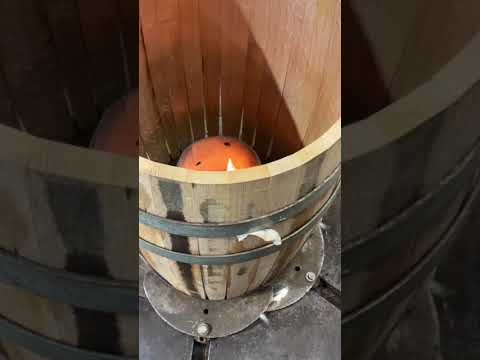
Toasting the Oak
Once the barrel has taken shape, it’s time for one of the most important steps: toasting the inside.
When we order a barrel, we choose the level of toast we want — generally light, medium or heavy.
We also discovered that Mercurey can actually toast barrels to almost any level you specify.
The toast makes a significant difference to the character the oak can contribute to the wine.
A heavier toast tends to give more pronounced smoky, charry and roasted flavours, while a lighter toast is more subtle, allowing flavours such as vanilla and the natural character of the oak to be more apparent.
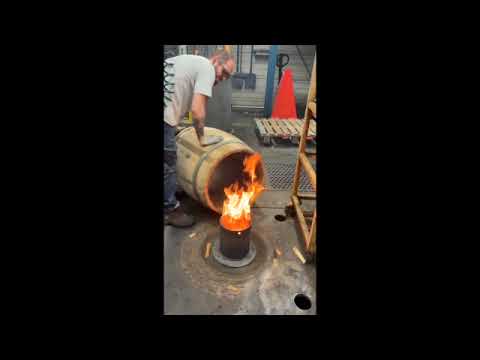
Standing in the cooperage watching the barrels being toasted was fascinating.
Each cooper develops an extraordinary feel for the process. They can judge how long the barrel needs to remain over the open flame to achieve the right level of toast and, just as importantly, to make sure the toast is even all the way around the inside of the barrel.
It was a cold winter’s day outside, but it certainly wasn’t cold inside the cooperage!
And while the flames make for a pretty spectacular sight, there is much more to the process than simply putting a barrel over a fire. The temperature, timing and intensity all have to be carefully controlled.
Making every piece of oak count

One of the things that really struck us during the visit was how seriously Mercurey takes the idea of using every part of the oak.
These are beautiful, slow-grown oak trees, and there is no appetite for simply throwing away pieces that aren’t large enough to become staves.
Smaller pieces are carefully fitted together to create a solid block of wood.
From this, the cooperage can carve the circular pieces that become the barrel heads — the round ends of the barrel.
Even here, there is a surprising amount of skill involved.
The Upper Reach Fish
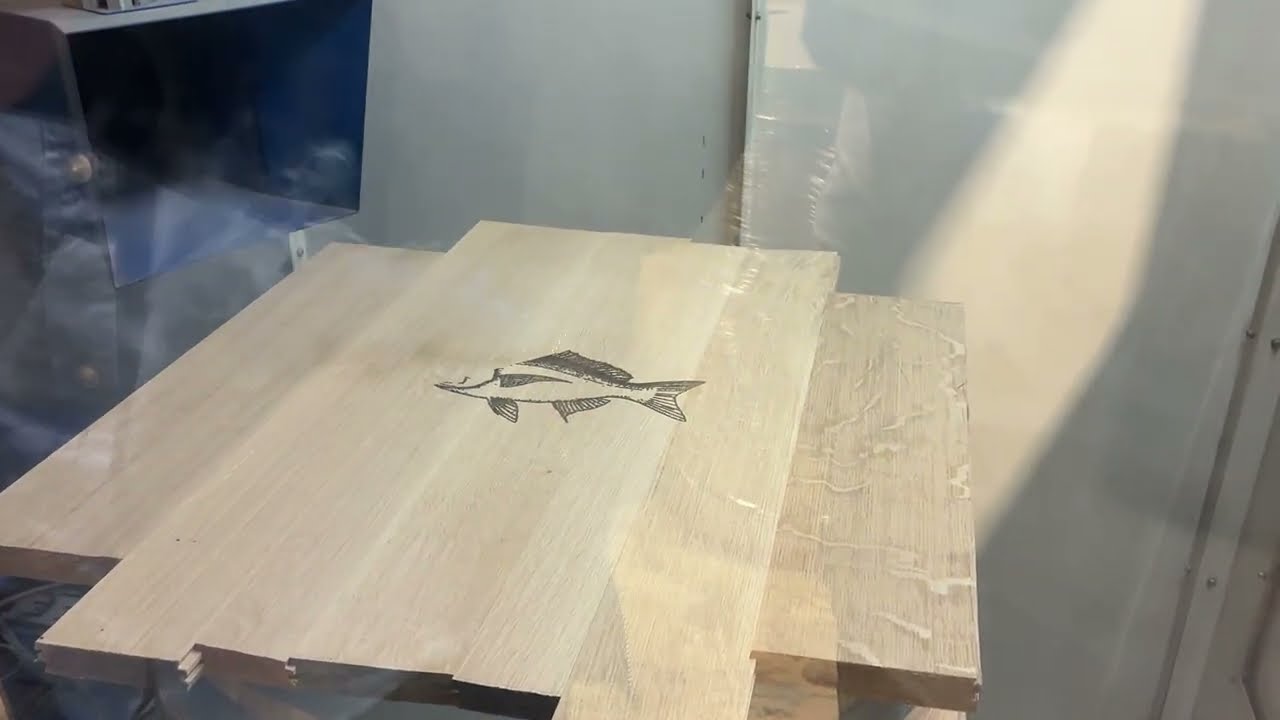
A few years ago, Mercurey told us they could put our logo onto the oak barrel heads.
Of course, we said yes.
So when they showed us how the barrel heads are made, we were interested to see the process.
They put a black block of oak into a machine and we watched as it began to work.
Nothing seemed to happen for a few moments.
Then they turned it around and showed us.
There, etched into the oak, was the Upper Reach fish.
It was such a great moment — seeing our logo appear on the very piece of oak that would eventually become part of one of our wine barrels.
After nearly 30 years of working with Mercurey, it was a lovely reminder of just how closely their craftsmanship and our winemaking have become connected.
Not a single barrel leaves without being tested

By this point, the barrels looked finished to us.
But unsurprisingly, Mercurey isn’t quite prepared to take our word for it!
Every barrel goes through a series of rigorous checks to make sure it is structurally sound and, most importantly, doesn’t leak.
The barrels are pressure tested and filled with water to check for leaks.
And occasionally, one doesn’t pass.
That’s when another important part of the cooper’s job begins: finding out exactly what has gone wrong and working out how to fix it.
In fact, this is much of what the Master Cooper does. He spends his time in the workshop repairing imperfect barrels and making sure that the finished product meets the required standard.
Nothing is simply discarded if it can be repaired.
Quality at every step
We were actually taken around the cooperage by the Quality Manager, which gave us a fascinating insight into just how much checking happens throughout the entire process.
At every stage, he showed us how the wood is inspected for imperfections and how the team works to maximise the use of every piece of oak.
It’s easy to look at a finished barrel and think of it simply as a beautiful wooden container for wine.
But after seeing how they’re made, we now see them quite differently.
Each barrel represents a huge amount of craftsmanship — from selecting the oak, shaping and assembling the staves, bending them with fire and steam, toasting the inside, making the barrel heads, testing for leaks and finally checking every detail before it leaves the cooperage.
And then, eventually, the barrel arrives at Upper Reach.
It gets filled with wine.
And over the months and years, something else happens.
The oak, the wine and the time spent together become part of the character of the finished wine.
That’s what we’ve loved about Mercurey barrels for almost 30 years — not that they dominate the wine, but that they quietly contribute to the style we’re trying to create.
And after seeing where they come from, we have an even greater appreciation for them.
And then, the finished product…
Aren’t they gorgeous?
It’s a long way from a piece of oak in a French forest to a finished barrel sitting in our winery.
And we’re pretty lucky to get to see — and taste — the final part of that journey.


